
Types of Workwear: A Complete Guide for Different Industries

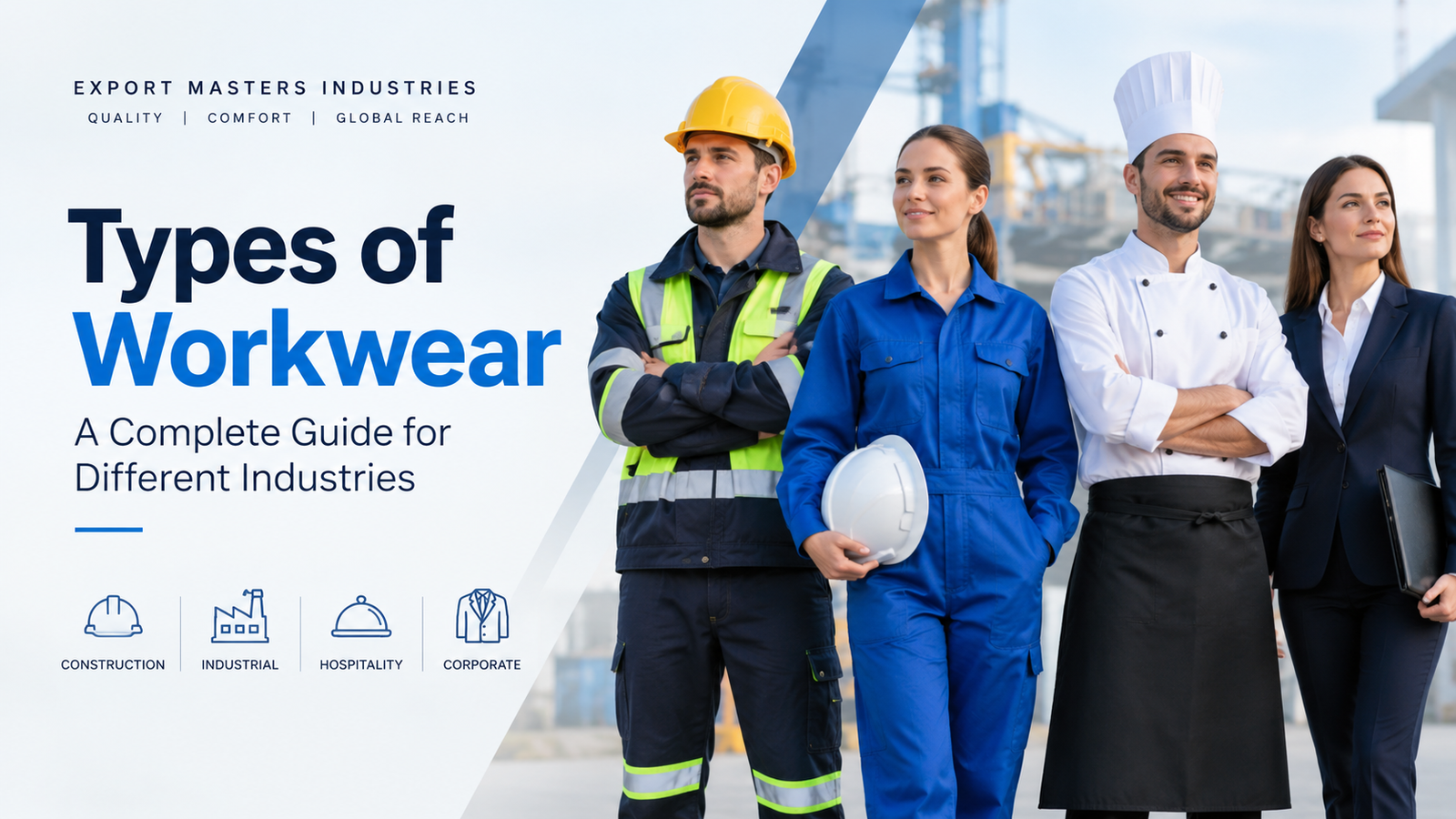
Workwear is designed to provide employees with comfortable, practical and suitable clothing for their daily working environment. Different industries require different types of workwear depending on the job, workplace conditions, weather and level of protection required.
From work jackets and trousers to coveralls, shirts and high-visibility clothing, workwear can be manufactured in many different styles and fabrics. Businesses can also customize workwear with company colors, logos, embroidery, printing and other details.
In this guide, we explore the main types of workwear and how they are commonly used across different industries.
What Is Workwear?
Workwear is clothing designed specifically for people working in professional, industrial, commercial or service environments. Depending on the application, workwear may focus on durability, comfort, visibility, protection, weather resistance or a combination of these features.
For companies purchasing clothing for employees, workwear can also provide a consistent professional appearance while allowing garments to be customized according to company requirements.
1. Workwear Jackets
Work jackets are one of the most common types of workwear. They can be designed for indoor or outdoor working environments and are available in different fabrics, weights and construction methods.
Common work jacket options include:
- Lightweight work jackets
- Heavy-duty work jackets
- Softshell work jackets
- Fleece-lined jackets
- Winter work jackets
- Waterproof work jackets
- Quilted work jackets
- Custom work jackets
Work jackets can also include features such as multiple pockets, reinforced areas, adjustable cuffs, zippers and customized branding.
2. Work Trousers and Work Pants
Work trousers and work pants are designed for employees who need durable and practical lower-body clothing during their working day.
Depending on the application, work pants may include:
- Multiple utility pockets
- Reinforced knee areas
- Hammer loops
- Tool pockets
- Adjustable waistbands
- Durable stitching
- Different fabric weights
Work pants can be manufactured in cotton, polyester, blended fabrics and other materials according to the requirements of the buyer and intended application.
3. Work Shirts
Work shirts are commonly used in construction, industrial, maintenance, hospitality, service and corporate environments.
They can be produced in different styles, including:
- Long-sleeve work shirts
- Short-sleeve work shirts
- Button-up work shirts
- Polo shirts
- Utility shirts
- Corporate work shirts
Businesses can customize work shirts with embroidered logos, printed designs, woven labels, company colors and other branding details.
4. Coveralls and Overalls
Coveralls and overalls provide a practical option for employees who need greater garment coverage during work.
They are commonly used in industries such as:
- Manufacturing
- Automotive
- Engineering
- Maintenance
- Construction
- Industrial services
- Workshops
Coveralls can be designed with several pockets and functional details. Depending on the application, buyers may specify different fabrics, closures, colors and reinforcement areas.
5. High-Visibility Workwear
High-visibility workwear is designed to make workers more noticeable in environments where visibility is important.
Examples include:
- High-visibility jackets
- High-visibility vests
- High-visibility trousers
- High-visibility coveralls
- High-visibility shirts
High-visibility garments can be produced in combinations of fluorescent fabrics and reflective materials according to the requirements and applicable standards of the intended market.
For buyers ordering high-visibility clothing, it is important to identify the required standard and garment specifications before production.
6. Waterproof and Weather-Resistant Workwear
Outdoor workers may require workwear designed for rain, wind or cold weather.
Examples include:
- Waterproof work jackets
- Rain jackets
- Waterproof trousers
- Softshell jackets
- Winter workwear
- Insulated work jackets
The appropriate fabric and construction depend on the working environment and the level of weather protection required.
7. Industrial Workwear
Industrial workwear is designed for employees working in manufacturing, production, engineering, maintenance and other industrial environments.
Industrial workwear may include:
- Work jackets
- Work trousers
- Shirts
- Coveralls
- Vests
- Protective garments
Durability, comfort, fit and functionality are important considerations when developing industrial workwear for regular use.
8. Construction Workwear
Construction workers often need clothing that allows freedom of movement while providing practical features for demanding working environments.
Common construction workwear includes:
- Work trousers
- Work jackets
- Work shirts
- Coveralls
- High-visibility garments
- Weather-resistant clothing
- Tool and utility garments
Construction workwear can also be customized according to company branding and employee requirements.
9. Corporate and Office Workwear
Workwear is not limited to industrial environments. Companies in offices, retail, hospitality and service industries may also require coordinated employee clothing.
Corporate workwear can include:
- Polo shirts
- Dress shirts
- Jackets
- Trousers
- Waistcoats
- Custom uniforms
The design can be adapted to create a consistent appearance while maintaining comfort for employees throughout the working day.
10. Hospitality Workwear
Hotels, restaurants, catering companies and other hospitality businesses often require specialized uniforms for different departments.
Hospitality workwear may include:
- Hotel staff uniforms
- Restaurant uniforms
- Chef clothing
- Housekeeping uniforms
- Front-desk uniforms
- Catering workwear
Different departments can use coordinated designs while maintaining their own functional requirements.
11. Customized Workwear
Businesses often require workwear that represents their brand rather than standard off-the-shelf garments.
Custom workwear can include:
- Custom colors
- Company logos
- Embroidery
- Screen printing
- Woven labels
- Printed labels
- Custom garment designs
- Custom packaging
When ordering custom workwear, buyers can provide specifications such as fabric composition, GSM, colors, measurements, size ratios, branding requirements and packaging instructions.
How to Choose the Right Workwear
Choosing suitable workwear depends on several factors.
Working Environment
Consider whether employees work indoors, outdoors, in workshops, factories, construction sites, offices or other environments.
Work clothing should be selected according to the hazards and conditions associated with the specific workplace.
Weather Conditions
Outdoor workers may need lightweight clothing for warm conditions or insulated and weather-resistant garments for colder environments.
Fabric
Fabric selection affects comfort, durability, weight and garment performance. Common options include cotton, polyester and cotton-polyester blends.
Buyers interested in textile safety can also review the OEKO-TEX® STANDARD 100, which tests textile products for harmful substances
Functionality
Consider the number and placement of pockets, closures, reinforcement areas, adjustable features and other requirements specific to the job.
Branding
Companies may want their workwear to include logos, embroidery, printing, labels and specific corporate colors.
Standards and Requirements
For protective or specialized garments, buyers should identify the applicable standards and technical requirements for their destination market and intended use.
Why Custom Workwear Can Be Useful for Businesses
Custom workwear allows businesses to develop garments around their own requirements rather than selecting a standard product.
A custom program can help buyers coordinate:
- Garment designs
- Fabric specifications
- Colors
- Branding
- Size ranges
- Packaging
- Department-specific uniforms
For larger orders, buyers can also work with a manufacturer to develop samples and production specifications before placing the final order.
Workwear Manufacturing and Wholesale
Businesses purchasing workwear in larger quantities may work directly with a manufacturer or wholesale supplier.
A manufacturer can develop garments according to the buyer’s specifications, including fabric, colors, measurements, branding, packaging and other production requirements.
Export Masters Industries manufactures custom apparel and workwear for international B2B buyers from Sialkot, Pakistan.
Our workwear production can be developed according to buyer specifications, including custom designs, fabrics, colors, branding and packaging requirements.
Frequently Asked Questions About Workwear
What are the main types of workwear?
Common types include work jackets, work trousers, work shirts, coveralls, high-visibility clothing, waterproof workwear, industrial workwear and customized uniforms.
What fabric is commonly used for workwear?
Workwear can be manufactured using different fabrics depending on the application. Cotton, polyester and cotton-polyester blends are among the commonly used options.
Can workwear be customized with a company logo?
Yes. Depending on the garment and production requirements, workwear can be customized with embroidery, printing, woven labels and other branding methods.
Can I order workwear in bulk?
Yes. Businesses can purchase workwear in bulk from manufacturers and wholesale suppliers. Production quantities, minimum order requirements and specifications depend on the manufacturer and product.
How do I choose workwear for my employees?
Consider the working environment, weather conditions, required functionality, fabric, fit, branding requirements and any applicable technical or safety standards.
Conclusion
Workwear comes in many different forms, from basic work shirts and trousers to specialized high-visibility, weather-resistant and industrial garments.
The right workwear depends on the industry, working environment and requirements of the employees. For businesses ordering custom clothing, working directly with a manufacturer can also provide greater control over garment specifications, branding, sizing and packaging.
If you are looking for custom workwear manufacturing or wholesale workwear production, contact Export Masters Industries to discuss your product requirements and specifications.